|
|


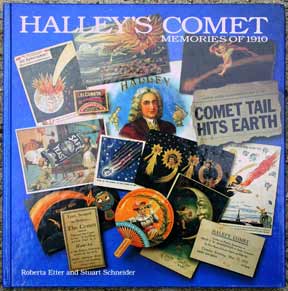
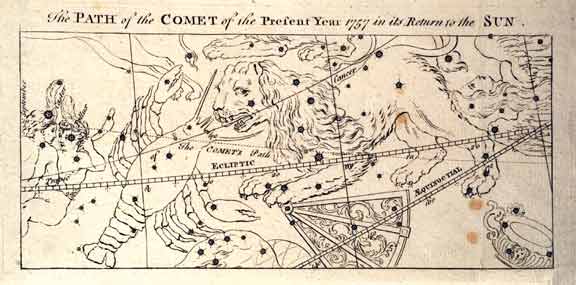
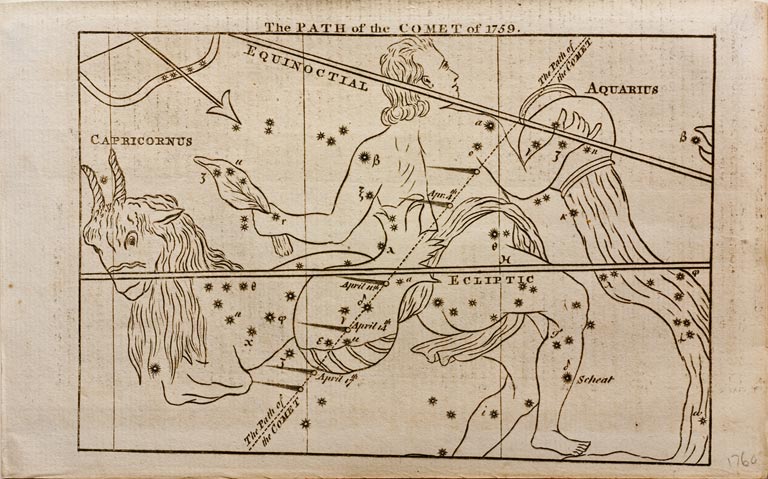
Halley's Comet was named for Sir Edmund Halley, the royal astronomer. In 1682 Halley saw a comet in the sky. He investigated previous comet appearances (notably those of 1531 and 1607) and determined that the comet of 1682 was the same comet that had returned. It was on an eliptical orbit of our sun. Halley predicted that it would return again in 1758. When it did return in 1758, it received its name "Halley's Comet". Its orbit was almost exactly 76 years. A comet is a dirty snowball that orbits the sun. As it approaches the sun, it heats up and a tail appears, streaking away from the comet's head. The tail always points away from the sun.
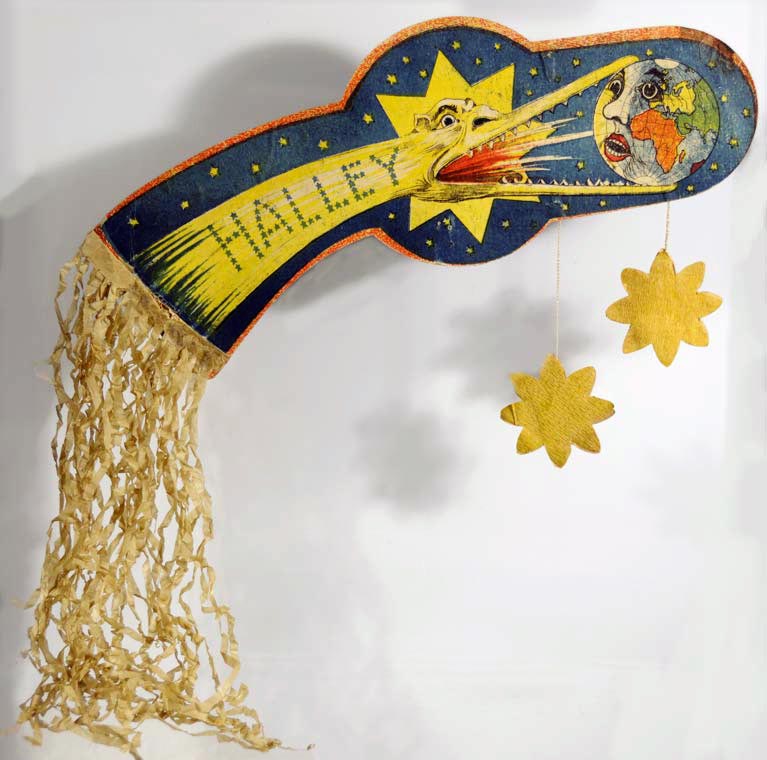
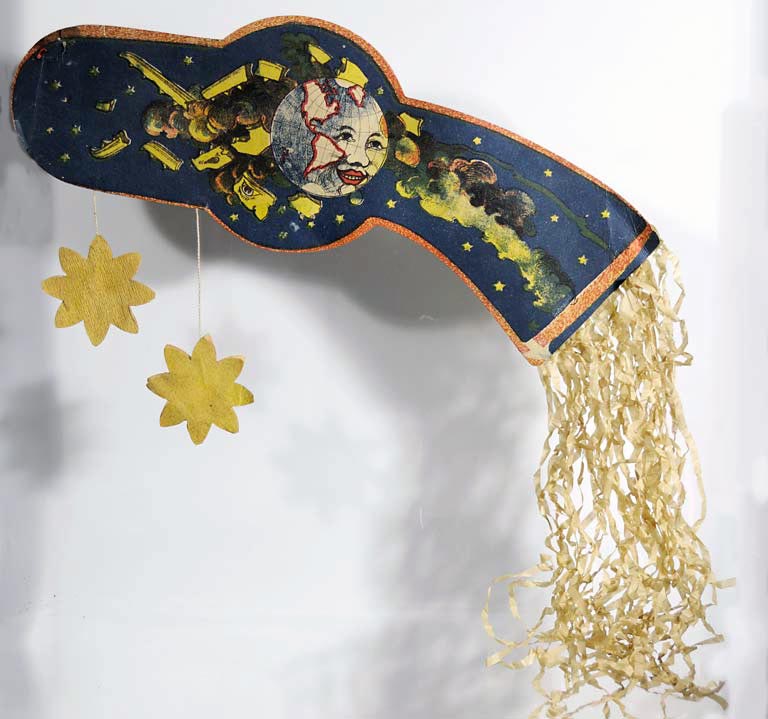
One of the newest addition to my collection - a party favor for a 1910 Halley's Comet party. A stick was attached to the center, just under the comet's head, and the whole piece could be waved in the air. It shows the comet trying to swallow the Earth and then breaking apart after the attempt. The comet piece is brightly colored lithography on heavy card stock. It also has 2 crepe paper covered stars hanging from it. The overall size is 16 inches wide and 6 inches tall. The stick is almost 30 inches long and has been removed to make the piece framable. Rather incredible that it survived all these years.
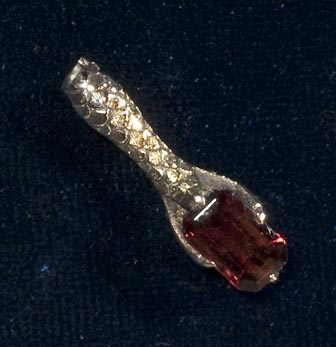
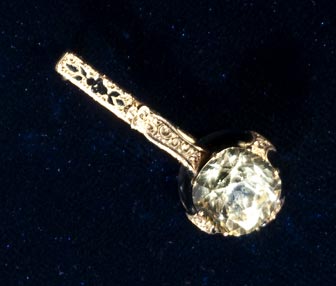
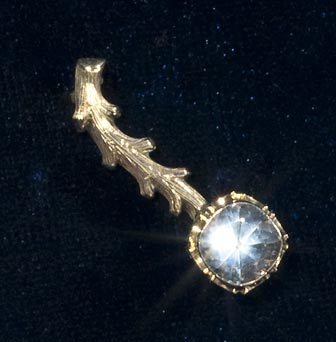
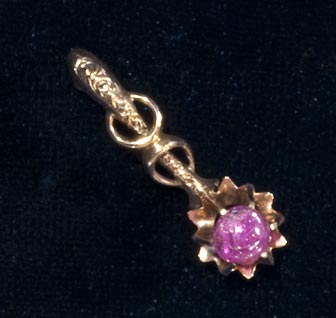
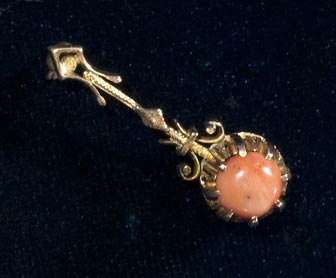
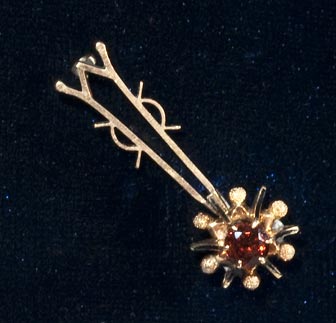
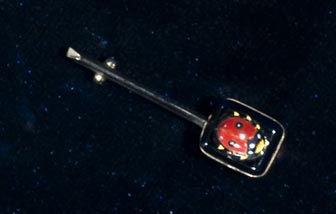
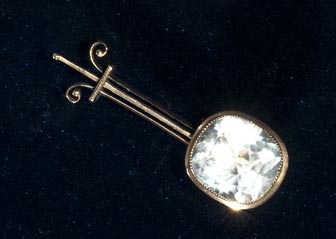
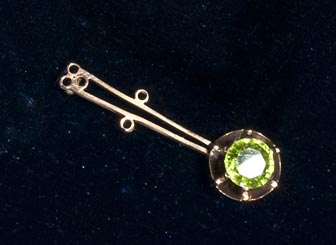
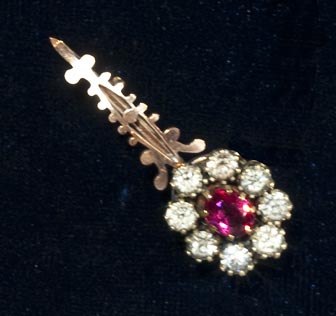
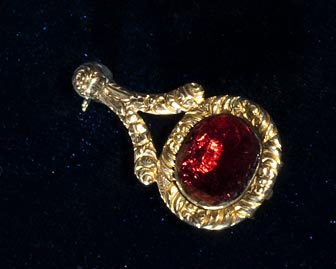
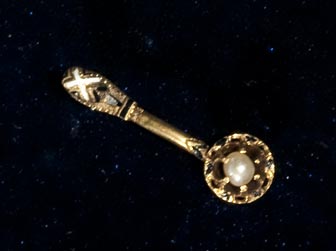
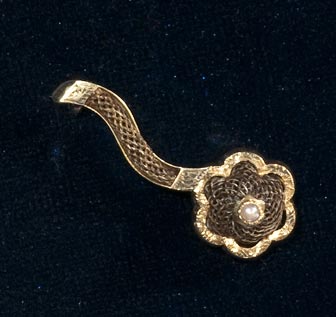
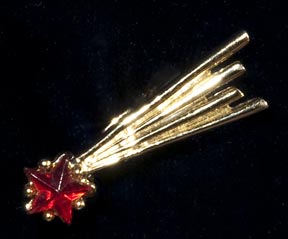
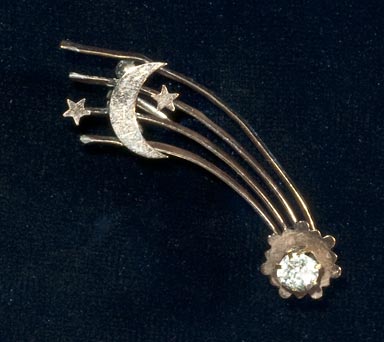
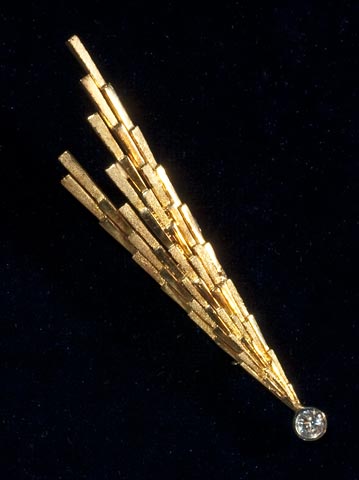
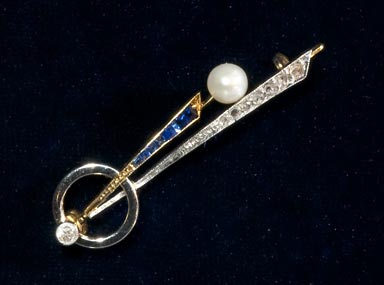
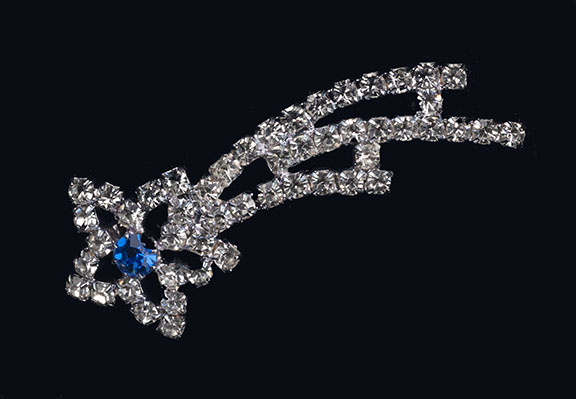
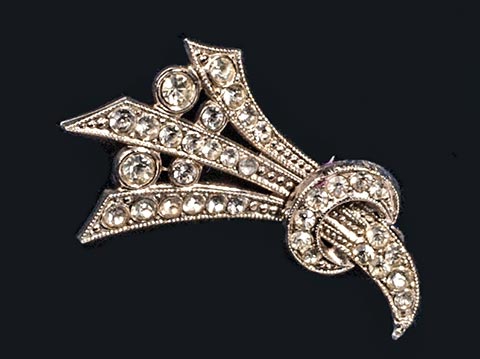
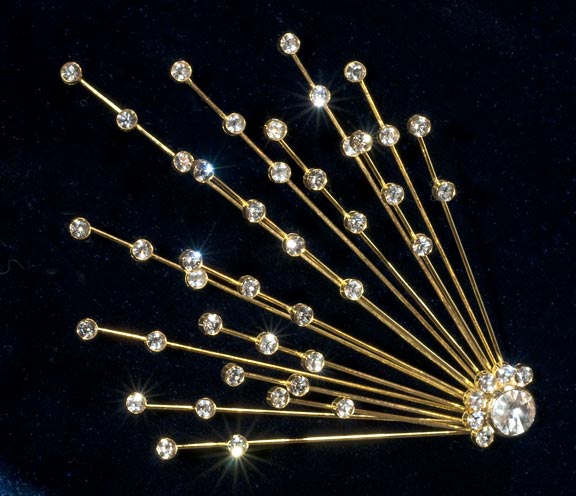
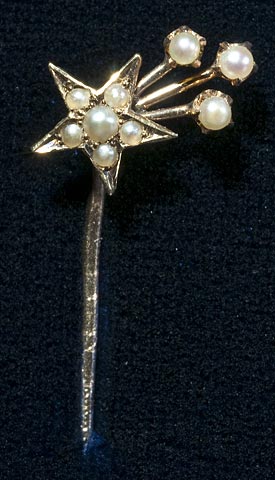
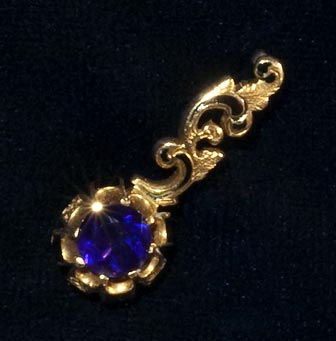
had a head and a tail to resemble the comet. They all have a similar, simple pin on the back to attach it. All are gold (carat can vary) and have a semiprecious stone or pearl in the head. These pieces from our collection are all from 1835. The size of the pin varies from 1.25 inches to 1.75 inches.
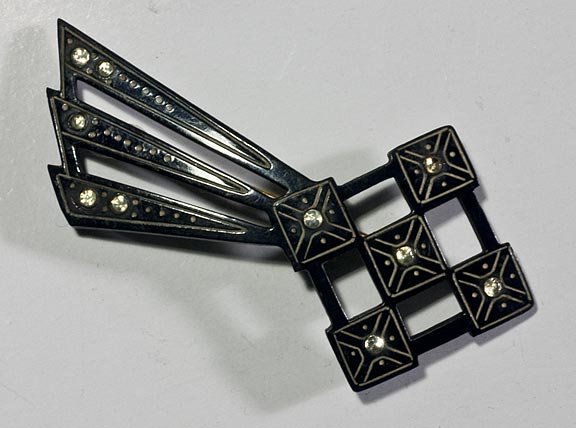
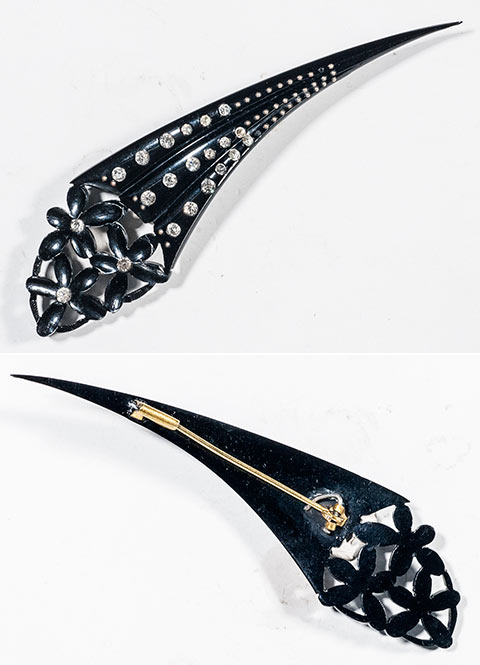
1910 black celluloid & diamonte comet pin, probably English 1910 brown celluloid & diamonte comet pin, probably English
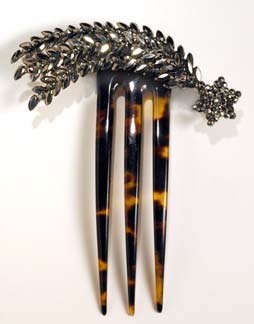
A rare, English, cut steel comet and tortoise shell hair slip or hair comb that was made in 1835. Every piece of steel is cut and polished and fit into frame of the piece.
1910 Comet stickpin, gold with seed pearls, only 0.5 inches wide
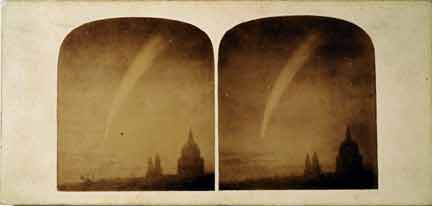
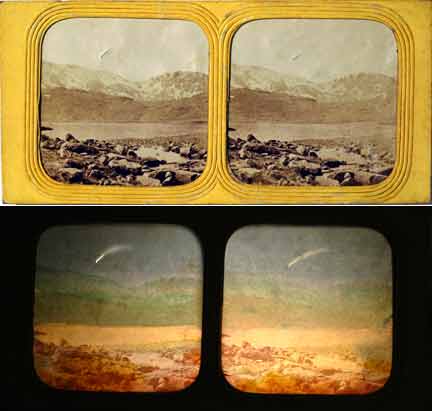
Donati's Comet of 1858 on Surprise stereoviews
I buy these Surprise Tissue stereoviews of the comet, should you have one to trade or sell
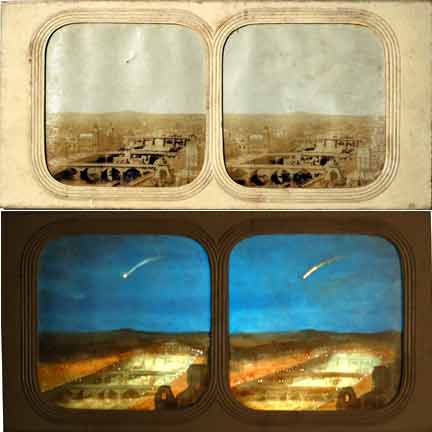
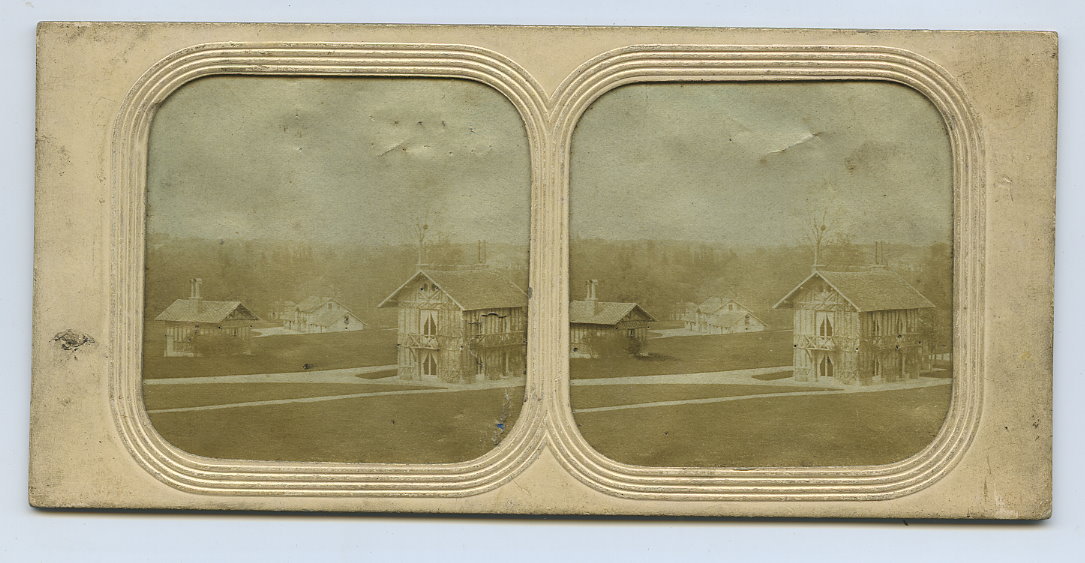
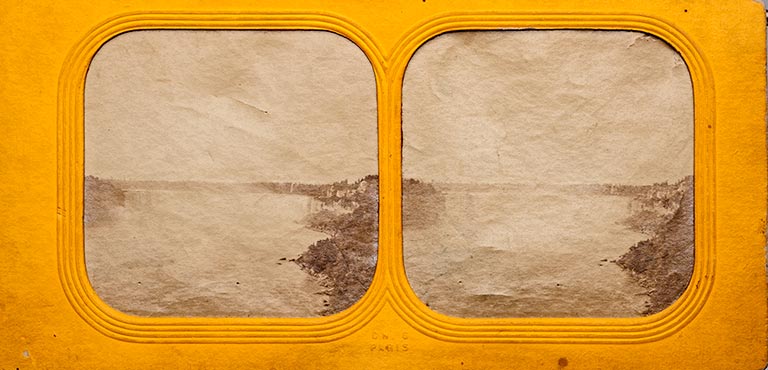
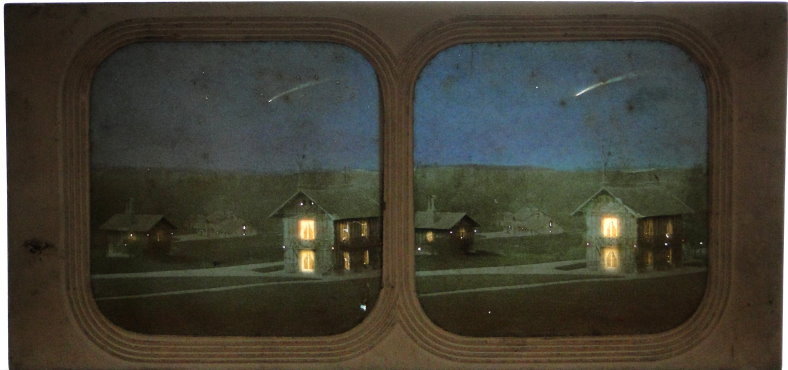
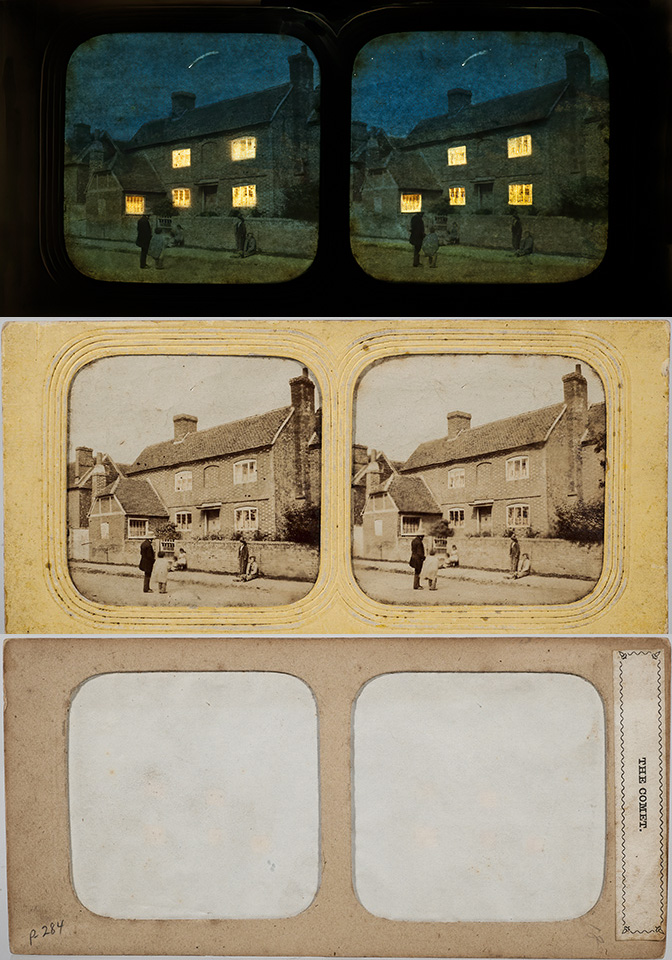
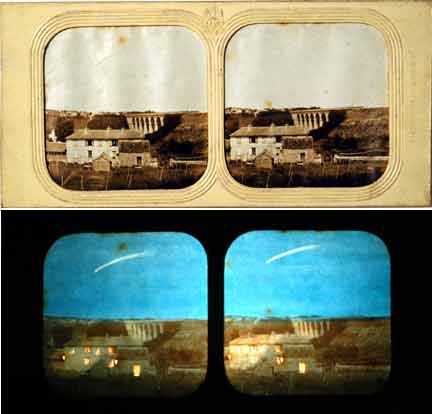
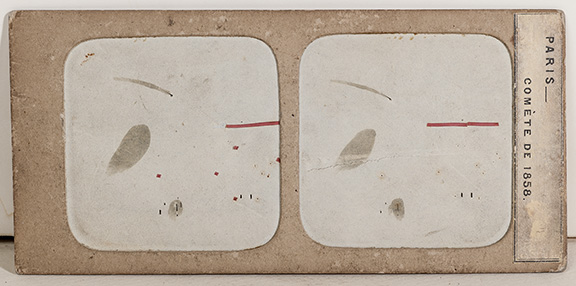
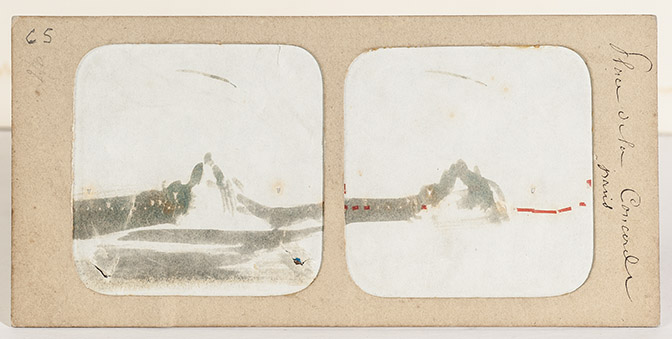
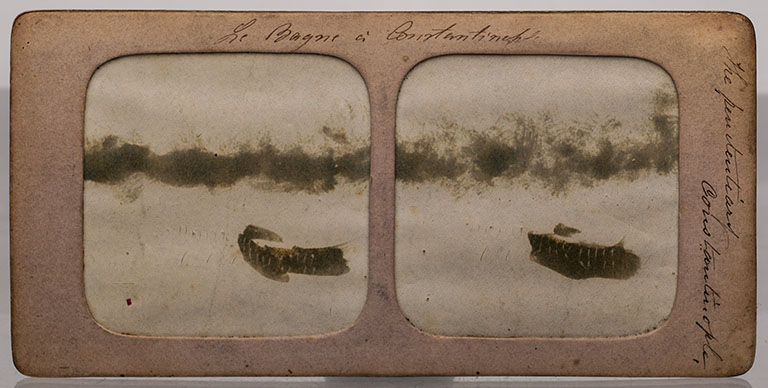
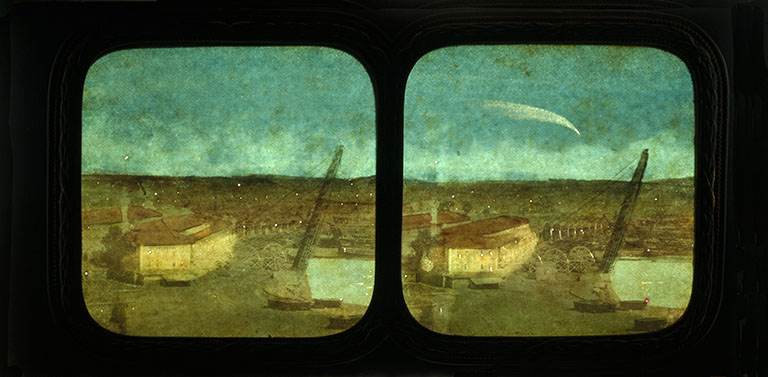
The comet's image was captured in a series of French tissue stereoviews (two slightly angled views that when seen through a stereoviewer appear in 3 dimensions). These stereoviews showed a daylight scene when illuminated from the front and a night time scene when lit from the back. They are rare and I constantly look for more.
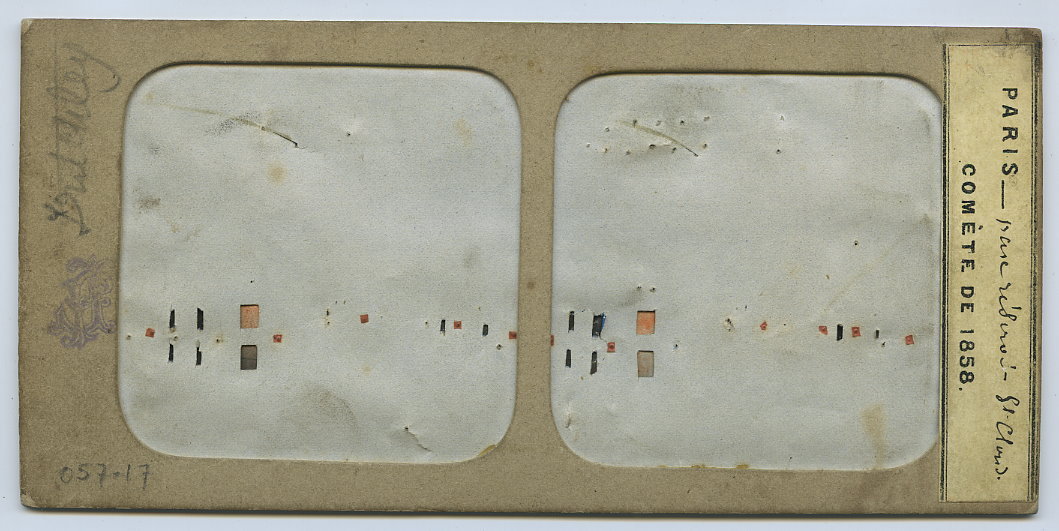
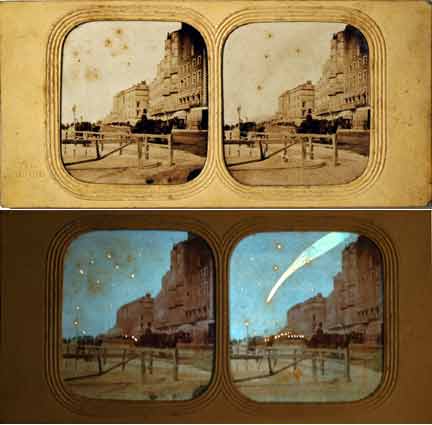
Many of these views were taken in and around Paris and are marked on the back as being of the Comete de 1858 The 1858 comet from a park in Paris (below left).
The 1858 comet on a surprise tissue from Paris. The image shows Niagara Falls, Canada. Interesting how the boat is only visible when lit from the back.
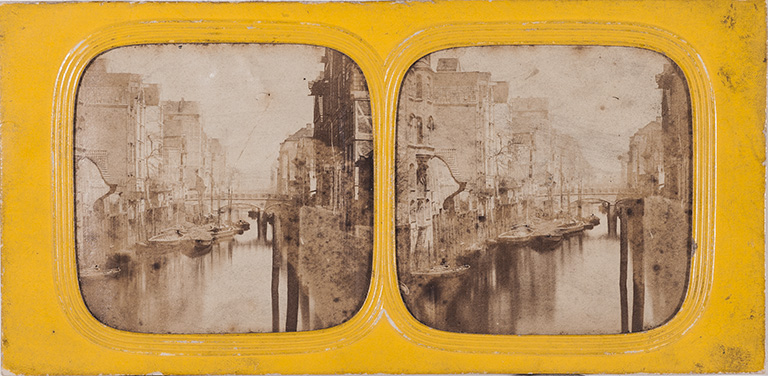
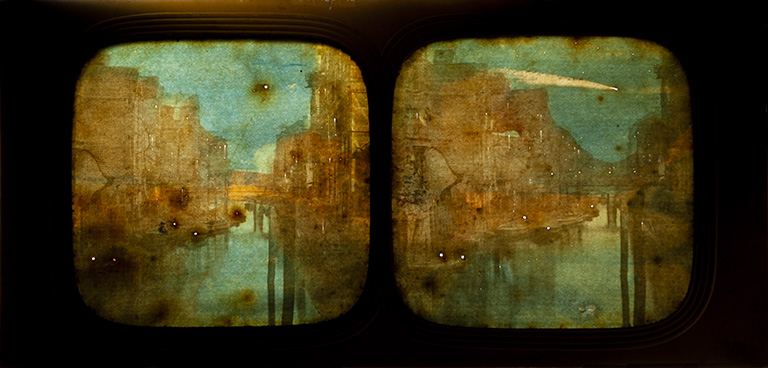
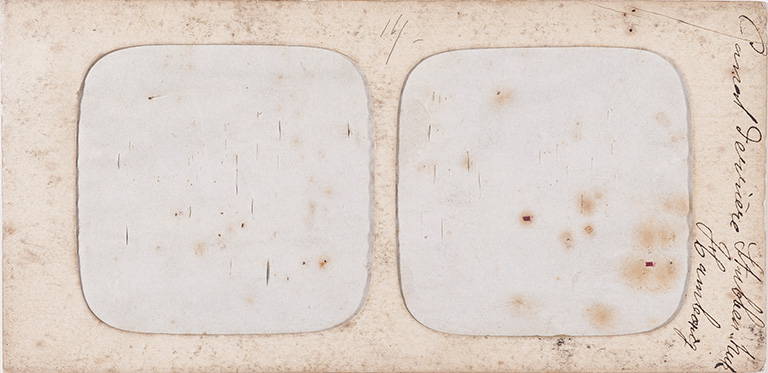
The 1858 Donati's comet on a surprise tissue possibly from Paris. The image shows a street scene, but the caption on the back is written in English. The 1858 Donati's comet on a surprise tissue at Hamburg, Germany, the canal behind Stubbenhuk. The caption on the back is written in French.
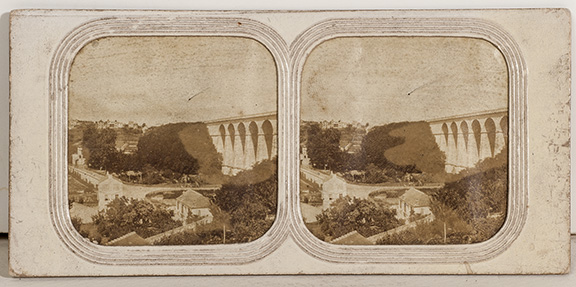
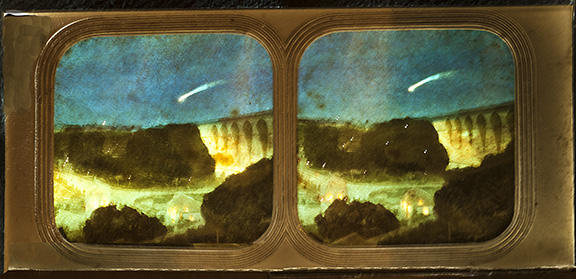
In 1858, a comet with a beautiful curved tail appeared in the sky. It was one of the brightest comets of the 19th century. It was discovered by Giovanni Donati on June 2, 1858. These were called "surprise tissue" stereoviews since the comet would not appear until the card was held to the light. This is a view of an Aquaduct in or around Paris.
The 1858 Donati's comet on a surprise tissue from Paris. The view shows a scene, similar to one above of the Aquaduct in or near Paris, but the angle of the image is different.
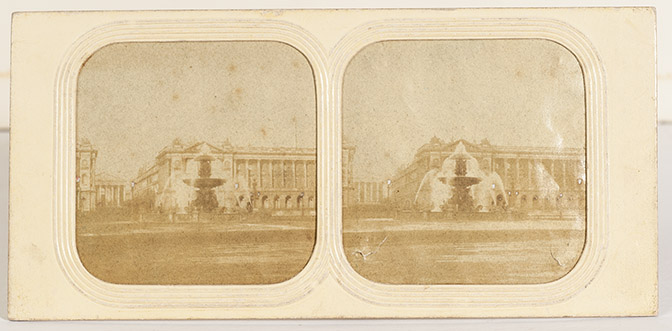
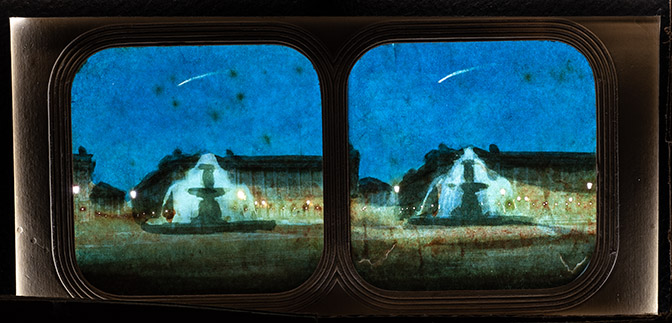
One of my latest finds: The 1858 Donati's comet on a surprise tissue from Paris. The view Place de la Concorde fountain in Paris shows the comet in the sky above.
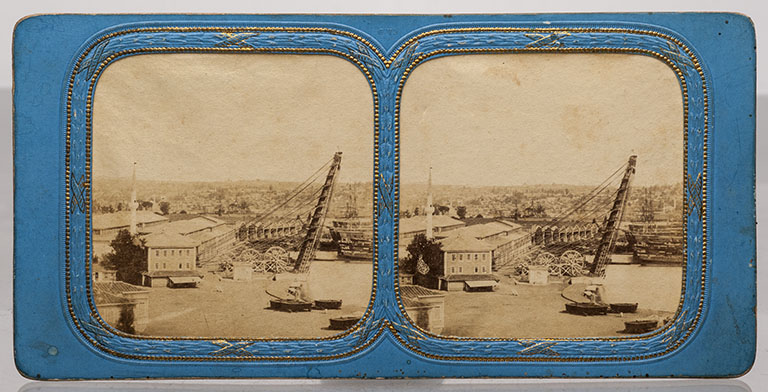
The 1858 Donati's comet on a surprise tissue in French. The view is in Constantinople, Istanbul, Turkey.